OUR TREATMENTS
Dental Braces in Clermont-Ferrand | Metal & Ceramic
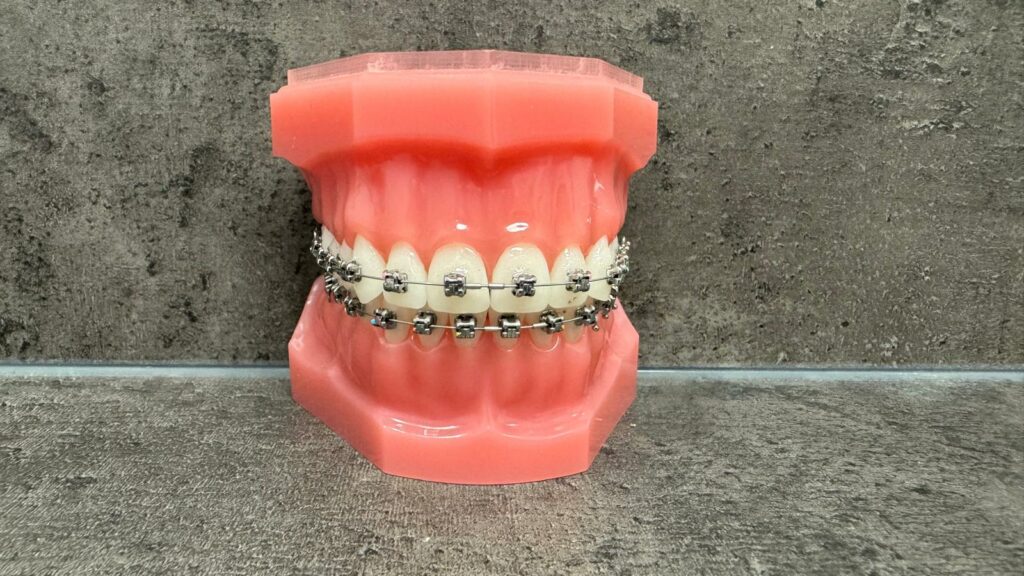
The OrthoClermont practice of Dr Alexandra Normand, dental surgeon, practice limited to orthodontics in Clermont-Ferrand, offers traditional orthodontic braces, also known as multi-bracket appliances. For several decades, this technique has remained the most widely used orthodontic treatment in the world, and for good reason: it can correct virtually all types of malocclusion, from the simplest to the most complex cases. Dental braces are the foundation of modern orthodontics, and their reliability is well established.
How braces work
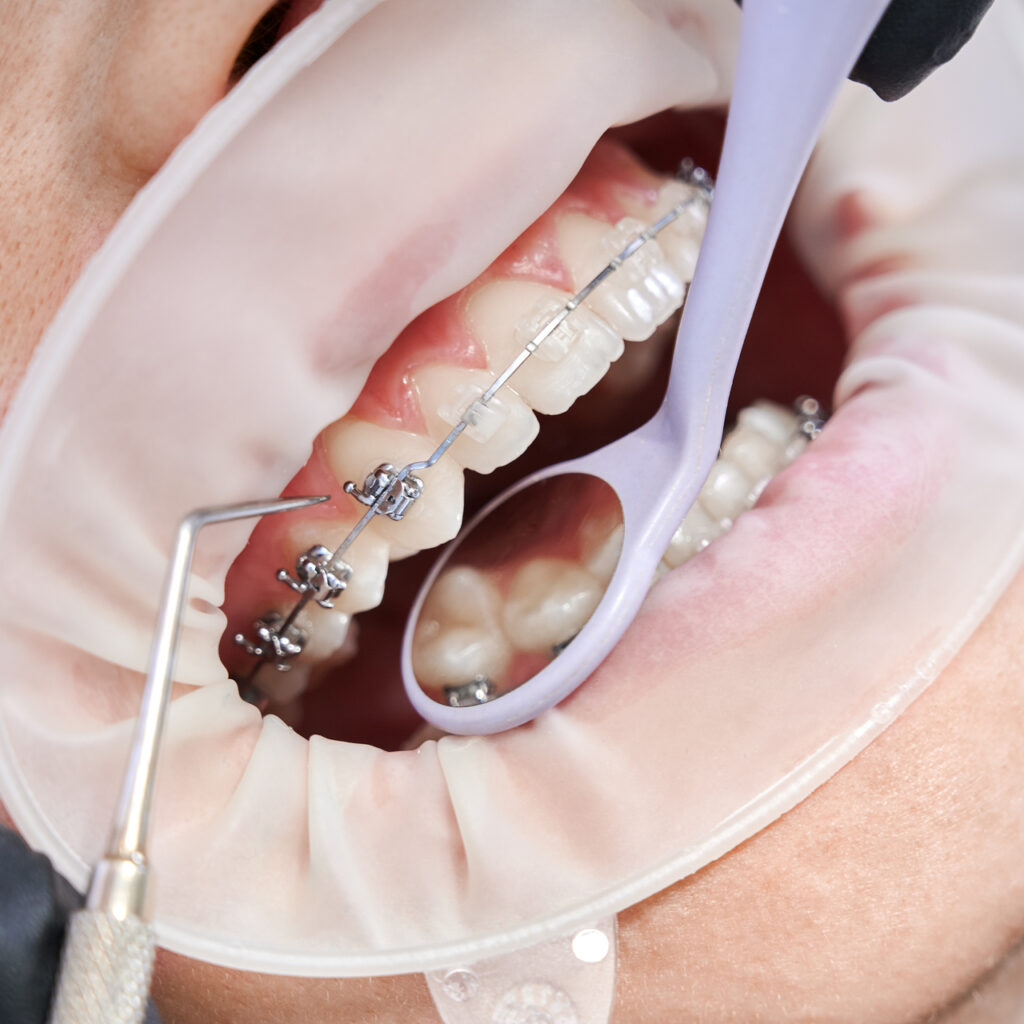
The treatment relies on a precise mechanical system. Brackets,small attachments,are bonded to the outer surface of each tooth using a specific dental adhesive. A metal archwire, made from a shape-memory alloy (nickel-titanium or stainless steel), connects all the brackets and applies gentle, continuous forces to the teeth. These forces trigger bone remodelling around the tooth roots, allowing progressive movement into the desired position.
Throughout treatment, the orthodontist replaces the archwire with wires of increasing cross-section and stiffness to refine movements. Intermaxillary elastics may be added to coordinate the relationship between the two jaws. Every stage is planned from the outset as part of a comprehensive treatment plan.
Available bracket options
At the OrthoClermont practice in Clermont-Ferrand, several types of brackets are offered depending on your aesthetic, functional and budgetary priorities:
- Metal brackets: The most traditional and most durable option. Their current small size makes them less visible than in the past. They remain the most affordable and versatile solution, suitable for all types of cases.
- Ceramic brackets: Made from a translucent material that blends with the natural colour of the tooth, they considerably reduce the visibility of the appliance. They deliver the same mechanical performance as metal brackets, with a far superior aesthetic result.
- Self-ligating brackets: These brackets feature a built-in clip mechanism that holds the wire without the need for elastic ligatures. The result: shorter appointments, improved comfort, and gentler forces applied to the teeth. This technology also reduces friction, which can speed up certain movements.
Treatment process at the practice
The first consultation at OrthoClermont includes a comprehensive assessment: clinical examination, radiographs (panoramic and cephalometric X-rays), intra-oral photographs and impressions or a digital scan of the dental arches. Dr Alexandra Normand analyses all of this information to establish an accurate diagnosis and propose a detailed treatment plan, including an estimate of duration and cost.
Bracket placement takes place during a dedicated appointment lasting approximately one hour. Each bracket is precisely positioned on the corresponding tooth. The archwire is then inserted and secured. The procedure is entirely painless. Some sensitivity may occur over the following two to three days as the teeth begin to move,this is perfectly normal and can be easily managed with a standard painkiller.
Follow-up appointments take place every four to eight weeks. At each visit, the orthodontist checks treatment progress, changes archwires as needed, adjusts forces and may add auxiliaries (elastics, springs) to optimise the movements under way.
Advantages of multi-bracket appliances
- Maximum versatility: suitable for correcting all types of malocclusion
- Precise and reproducible results, regardless of case complexity
- Generally lower cost than clear aligners or lingual orthodontics
- No special patient cooperation required since the appliance is fixed
- Proven effectiveness in children, teenagers and adults
- Can be combined with other devices (mini-screws, elastics, functional appliances)
Practical advice during treatment
Oral hygiene is the key factor in a successful multi-bracket treatment. Brushing must be carried out after every meal, paying particular attention to the area around the brackets and under the wire. The use of interdental brushes and special orthodontic floss is strongly recommended. The OrthoClermont practice provides a hygiene kit and detailed instructions on the day of placement.
Regarding diet, you should avoid very hard foods (biting into apples, nougat, croutons) and very sticky foods (caramels, chewing gum), which risk debonding a bracket or breaking a wire. If a bracket comes loose, contact the practice to arrange a prompt repair.
Cost and reimbursement
For patients under 16, the French social security system covers part of the orthodontic treatment, subject to prior approval based on the initial assessment. The OrthoClermont practice helps families prepare the application and navigate the administrative process with the health insurance fund.
For adults, treatment is not covered by social security, but many supplementary health insurance plans offer an orthodontic allowance that can cover a significant portion of the cost. A detailed quote is always provided before treatment begins, so that you can submit it to your insurance provider. The practice also offers flexible payment plans to spread the cost over the duration of treatment.
Frequently asked questions about braces
Does having braces put on hurt?
No, the placement itself is painless. A feeling of pressure and mild tooth sensitivity appears in the days that follow, then gradually subsides. Each adjustment may cause similar discomfort for one to two days.
Can I play sports with braces?
Yes, sporting activities remain entirely possible. For contact sports (rugby, boxing, martial arts), wearing a suitable mouthguard is recommended. The practice can advise you on the most appropriate model for your appliance.
Are the brackets very visible?
Metal brackets are visible, but their size has decreased considerably in recent years. If discretion is a priority, ceramic brackets are an excellent alternative: they blend with the tooth colour and are virtually unnoticeable.
Treatment duration
The average duration of multi-bracket treatment is between 12 and 24 months, depending on the severity of the case. Minor corrections (mild crowding, closing a gap) can be achieved in under a year. More complex cases involving extractions or associated skeletal corrections may require up to 30 months. At the end of active treatment, a retention phase (wearing a bonded wire behind the teeth or a night-time retainer) is essential to stabilise the results long term. Dr Alexandra Normand supports you throughout this phase at the OrthoClermont practice in Clermont-Ferrand.
OUR OTHER SOLUTIONS
USEFUL INFORMATION